
What Is the Angelus Prayer? A Daily Catholic Devotion
There was a time when prayer for me depended on how I felt.
Some days I’d do it. Some days I wouldn’t. If I was focused, I prayed. If I wasn’t, it got pushed off. It stayed inconsistent.
That kind of prayer doesn’t hold.
What started to change things wasn’t intensity. It was structure. Going back to things that didn’t move, whether I felt anything or not.
The Angelus is one of those prayers.
The Angelus is a traditional Catholic prayer centered on the moment the Angel Gabriel appeared to Mary and told her she would bear Christ. That moment comes from Scripture (Luke 1:26–38), and the prayer exists to bring that moment back into your day.
It’s not just remembering something that happened.
It’s stepping into it.
The structure is simple, but every line is intentional.
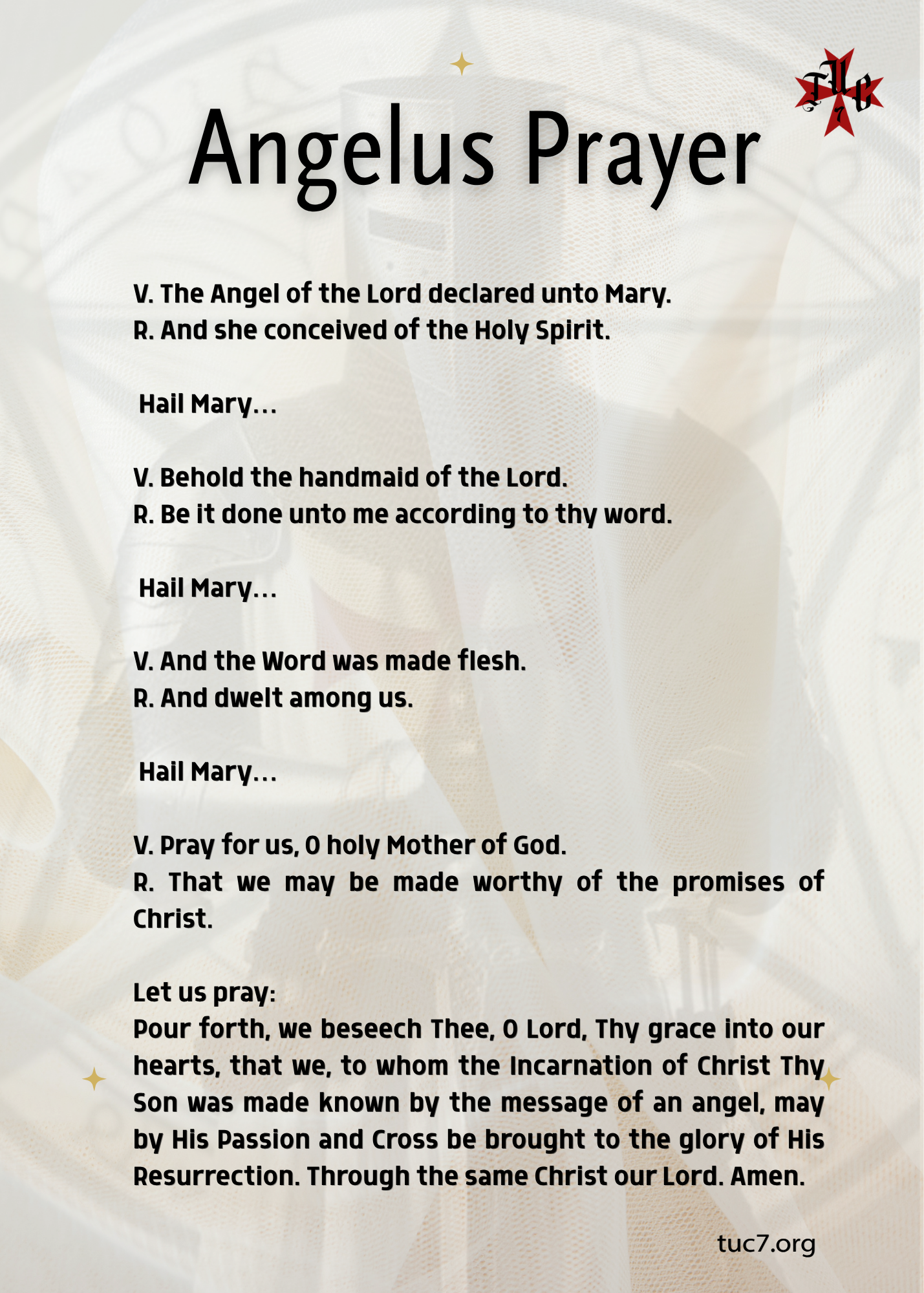
“The Angel of the Lord declared unto Mary, and she conceived of the Holy Spirit.”
That line is about God acting first. This wasn’t Mary’s plan. This was God initiating something.
“Behold the handmaid of the Lord, be it done unto me according to thy word.”
That’s Mary’s response.
In Catholic teaching, this is her fiat… her “yes.” Not partial. Not hesitant. She accepts what God is asking.
That line is where the prayer stops being historical and becomes personal.
Because it raises the question:
How do you respond when God interrupts your life?
“And the Word was made flesh, and dwelt among us.”
This is the center of everything.
When Catholics talk about the Incarnation, this is what we mean:
God didn’t stay distant
He became man
Not symbolic. Not metaphor.
Christ took on a real human body and entered into time, into daily life, into a broken world.
That’s why this line matters so much.
It’s not just theology. It’s reality.
Each of those lines is followed by a Hail Mary.
That’s intentional too.
The Hail Mary itself comes directly from Scripture, from the angel Gabriel’s greeting and Elizabeth’s words to Mary.
So the Angelus is built almost entirely from Scripture.
You’re not just saying prayers.
You’re repeating what was actually said in that moment.
The Angelus is traditionally prayed three times a day:
Morning, noon, and evening.
That’s not random either.
It’s meant to interrupt your day and bring you back to something real.
You stop… not because you feel like it…
but because it’s time.
That’s the part that changes things.
Most prayer depends on motivation.
The Angelus doesn’t.
It forces a pause.
Right in the middle of whatever you’re doing.
There was a point where I couldn’t rely on how I felt anymore.
If prayer depended on motivation, it didn’t last.
What helped was going back to things that held.
The Rosary. Set times. Devotions like this.
The Angelus doesn’t feel dramatic most days.
It feels simple.
Sometimes it feels like you’re just repeating the same words.
But that’s the point.
Consistency does something motivation never will.
If you’ve never prayed it, start simple.
Pick one time, usually noon.
Set a reminder.
Stop and pray it as it is.
Don’t adjust it.
Don’t try to improve it.
Let the structure do the work.
Over time, that small pause starts to reorient your day.
Not because of how it feels.
Because it’s consistent.
The Angelus isn’t about adding more to your day.
It’s about anchoring it.
And over time, that kind of structure changes more than intensity ever will.
